
A Rosario Central DLS kits URL is a direct link to a 512×512 PNG Canalla shirt that you paste into Dream League Soccer. All four slots are below, and each file was loaded into the game before it was listed here.

Rosario Central Logo
Official Logo 512×512 (2026/27)

Rosario Central Home Kit
Home Kit 512×512 (2026/27)

Rosario Central Away Kit
Away Kit 512×512 (2026/27)
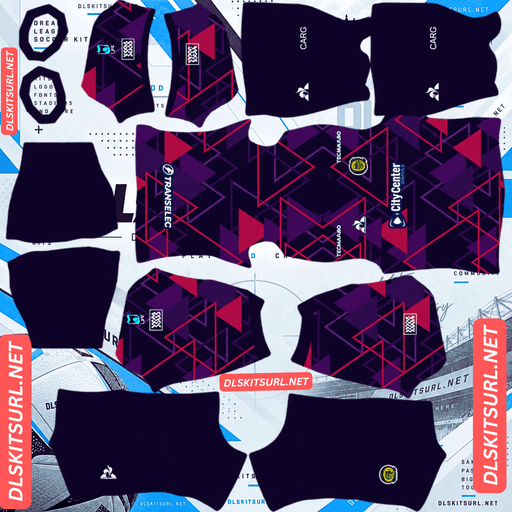
Rosario Central GK Home Kit
GK Home Kit 512×512 (2026/27)
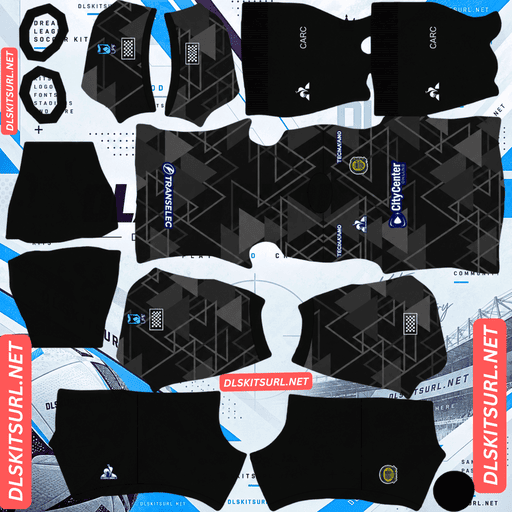
Rosario Central GK Away Kit
GK Away Kit 512×512 (2026/27)

Rosario Central GK Third Kit
GK Third Kit 512×512 (2026/27)
Central changed its crest this year, and unusually, the change actually makes the badge easier to reproduce in DLS.
The new star is in the centre, which saves it
Rosario Central updated its crest in 2026 after winning the Supercopa Internacional, adding a large star to the centre of the badge.
Which is unusual, and lucky
Dream League Soccer crops every imported badge into a circle.
That normally makes stars a problem.
When a club puts its stars above the crest, the circular crop cuts into the top edge first. The honour a badge is supposed to display can therefore be one of the first things to disappear.
That has been an issue on several clubs covered here, including Boca Juniors, Atlas, Palmeiras, Bahía, Tolima, Pereira, FC Zürich and D.C. United.
Central put the star in the middle.
That is almost the safest possible position. The circular crop removes from the outside toward the centre, so the star remains completely inside the usable area.
Which gives you a clean dating check too
A Rosario Central badge without the central star is from before the Supercopa Internacional win.
Do not rely on the filename. Badge files can remain online for years after a new version has been released.
The star gives you a much better check because it is an obvious visual difference.
Use the updated crest. It is current, and unlike an oversized star sitting above a badge, the important new element is also fully reproducible in DLS.
Marseille, Atalanta and Sporting CP have also changed their crests this cycle. Central’s change is unusual because it improves what the game can actually display.
The home is close to ideal for this game
The 2026 home celebrates the centenary of the Gigante de Arroyito while keeping Central’s familiar blue and yellow bastones. Le Coq Sportif produces the shirt.
Three things go right at once
First, yellow against blue gives you excellent contrast. The colours are far apart in brightness, so the stripes remain clearly separated even after the image is reduced.
Second, vertical stripes are forgiving geometry. They follow a consistent path down the shirt instead of forcing several complicated seams to meet.
Third, both colours work well against the pitch. Yellow is particularly easy to see on green grass, while the blue remains clearly separated.
So the home has very little working against it.
América de Cali’s away and Boca Juniors’ home belong to the same useful category: designs where the colour contrast and construction both cooperate with the 512×512 format.
Which also makes it a weak test
There is a catch.
A design this simple can make a mediocre file look convincing. Wide blue and yellow stripes will usually remain recognisable even when the source image is not particularly good.
For that reason, do not judge the file only by the bastones.
Check the collar, cuffs, crest and Le Coq Sportif branding instead. These are smaller defined shapes with edges that expose a weak file much more quickly.
Also confirm the image really is 512×512 rather than an enlarged version.
But locate the stadium tribute before you judge it
The shirt honours the Gigante de Arroyito, so there are commemorative details to look for.
Open the file at full size and see where the tribute is positioned.
If it is on the chest, your imported badge will cover it.
If it is on the upper back or around the neck, it occupies one of the smallest and busiest areas of the DLS shirt, where squad numbers are also drawn.
If it sits near the hem, it becomes tiny and can be partly covered by the shorts.
In all three situations, a small piece of anniversary text or fine artwork can disappear without the file actually being faulty.
The bastones are the important structural element of the shirt, and they remain intact.
Fiorentina’s centenary marking, Alianza Lima’s anniversary crest, Columbus Crew’s founding tribute and América de Cali’s 1927 date all face essentially the same limitation.
Number colour
DLS does not take your number colour from the PNG.
It uses two separate in-game swatches: one for the shirt numbers and another for the shorts.
For the home, white or red is the safest choice.
The blue and yellow bastones continue across the back, so blue numbers would disappear into the blue sections and yellow numbers would disappear into the yellow ones.
A third colour gives the number a much better chance of remaining readable.
The third is petrol and yellow
Central’s 26-27 third uses a dark petrol colour with vibrant yellow socks.
Petrol is a middling base
Petrol sits somewhere between green and blue, which gives it a slightly awkward relationship with the pitch.
It is dark and blue enough to separate from grass green, so it does not disappear in the way a grass-toned shirt can.
But it has very little brightness of its own.
Radioactive green, such as Juárez’s, separates strongly. Vivid green, like Schalke’s, also remains visible. Turquoise, as seen on Alavés, pushes toward blue and therefore works reasonably well.
Petrol sits in the middle. It is adequate, but it is not naturally bright.
Emelec provides a useful comparison because the same general colour family can look more subdued than a bright blue or yellow.
And the yellow is doing the work
The yellow provides the contrast the petrol lacks.
A bright yellow element against a dark petrol base creates a wide value range, so wherever yellow appears, it remains easy to identify.
DLS treats the shirt, shorts and socks as separate areas. That means the petrol-and-yellow split does not require a difficult seam to line up across the entire kit.
The garments simply retain their assigned colours.
Bahía and Young Boys use similar multi-garment colour separation this season.
Use yellow or white numbers on the third, depending on the exact area behind them.
What to check
Compare the file directly with the kit card above.
Then check the details that should survive even at 512×512:
Any petrol-to-yellow boundary should be sharp.
Collar and cuff trim should have clean edges.
The Le Coq Sportif branding, crest and sponsor should remain defined.
Confirm the file is genuinely 512×512.
The colour split itself should not be difficult for a good file.
The away
Central’s 2026 away was released alongside the rest of the Le Coq Sportif range.
For this one, compare the actual file with the kit card rather than relying on a description from another site.
The same structural checks apply:
Look at every colour boundary. It should remain clean rather than bleeding into the neighbouring colour.
Check the collar and cuffs. Small trim exposes compression and poor resizing quickly.
Check the Le Coq Sportif logo, crest and sponsor. They should have defined edges.
And, as always, confirm the dimensions.
Watch for partial bastones
Central has used a partial stripe treatment before.
The 2024 away was white but retained traces of the blue and yellow bastones across the lower part of the shirt, with other club-colour details around it.
That creates a different technical problem from a normal full stripe.
The blue and yellow themselves are easy to reproduce against white. The difficult part is where the stripes stop, fade or transition.
If the source file is too small, the transition can become stepped or simply cut off instead of looking deliberate.
FC Zürich’s fading pinstripes and Heidenheim’s fading stripes demonstrate the same problem.
So if the 2026 away uses a similar partial-bastones treatment, follow each stripe to its endpoint. That is where a weak file will show itself first.
Which Rosario Central kit survives best?
The home is the strongest overall. The blue and yellow bastones have excellent contrast, vertical geometry is forgiving, and both colours remain visible against the pitch.
The away needs to be judged against its actual design, particularly if it uses a partial stripe treatment.
The third reproduces cleanly because the petrol and yellow are separated across different garments. Its main weakness is playability: petrol is visible, but it does not have much brightness, so the yellow carries most of the visual impact.
Le Coq Sportif replaced Umbro
Central moved to Le Coq Sportif for 2025, ending its Umbro partnership and returning to a supplier it had not worn for nearly three decades.
Which gives you a clean dating check
An Umbro logo means the Rosario Central shirt is from 2024 or earlier.
That is useful because older Central files remain widely available, and Umbro supplied the club through a successful period.
The supplier change is therefore one of the quickest ways to separate an older file from the current range.
Fiorentina, Alavés, Pachuca, Tijuana and América de Cali have also gone through recent manufacturer changes.
And one Umbro-era kit creates a badge problem
Central’s 2024 third celebrated the Scottish origins of the club’s founders and used a retro crest produced for Umbro’s own centenary. The design was also controversial among some supporters.
If you import that shirt, the retro crest printed on the PNG will not necessarily be the crest you see in-game.
Your imported DLS badge is drawn over the shirt’s own chest badge.
And the badge is global.
So if you choose the retro crest to match that one kit, the same retro badge appears on your other Central kits too.
With the current crest now carrying a central star that survives the circular crop, that is not a particularly good trade.
Houston Dynamo’s Archive Kit creates the same problem this season.
How to tell if a Rosario Central file is current
Four checks are enough.
First, the current crest should have the central star added after the Supercopa Internacional victory.
Second, the manufacturer should be Le Coq Sportif, not Umbro.
Third, the home should retain the familiar blue and yellow bastones and the Gigante de Arroyito anniversary connection.
Finally, compare the actual design with the kit cards above because Central’s striped shirts can look similar across different seasons.
The first two checks are the quickest. A central star plus Le Coq Sportif branding is a very strong indication that you are looking at the current range.
A note on Argentine season labels
Argentina’s football calendar is different from the European one.
The season is generally identified by the calendar year, which is why these Central shirts are labelled 2026.
Some websites may still call them 26-27, particularly when describing how long the shirts remain in use.
That does not necessarily mean you are looking at different kits.
Compare the design, not the year written in the filename.
How to use a Rosario Central DLS kits URL
Copy the direct image URL using the copy button on the kit card. Do not copy the address from your browser’s address bar if that address leads to a webpage containing the shirt.
In Dream League Soccer, open My Club → Customise → Kit.
Make sure you are in Kit rather than Logo. The badge has its own import section.
Select the slot you want to replace before pasting the URL. Press and hold the field, tap Paste, then choose Confirm. Older versions may call the button Download.
The three outfield kits use the three normal kit slots, while the goalkeeper remains separate.
For the third, remember that the shirt, shorts and socks are separate colour areas. Central’s petrol-and-yellow combination is meant to stay split across those garments.
The first custom kit requires the one-time gem unlock. After that, kit changes are free.
Test the link first
Open the direct URL in a browser before importing it.
The image should appear by itself, without a webpage, navigation, buttons or other content around it. Ideally, the address should end in .png.
A page showing the shirt is not the same thing as the PNG itself. DLS needs the direct image file.
The home is not a particularly useful visual quality test because its broad blue and yellow stripes can look good even in a mediocre file.
Instead, inspect the collar, cuffs, crest, branding and actual dimensions.
For the away, pay particular attention to any point where partial bastones end or change.
Why do Rosario Central kit URLs stop working?
There are three common reasons.
Free image hosts can delete files. An upload may disappear after months or years even though someone else’s page still references it. Central has a strong following in Argentina, so current kits usually have plenty of uploads, but individual variants can still disappear.
Hotlink protection can block DLS. A host may allow the image to load normally in your browser while refusing requests coming from another application. That produces the confusing situation where the URL works for you but fails inside the game.
The preview and direct file can be different. A webpage may show a thumbnail hosted locally while its download link points to another file or server. The page can continue displaying the shirt after the direct image has stopped working.
For the files listed here, the shirt shown and the copied URL refer to the same image file on the same server.
The Rosario Central badge
Set the badge separately through My Club → Customise → Logo.
Central’s crest uses the club’s familiar blue and yellow, with the interlocked CARC lettering and the new central star marking the 2026 Supercopa Internacional victory.
The star is the strongest part of the update from a DLS perspective.
Because it is centred, the circular badge crop does not cut it away.
The interlocked lettering is more vulnerable. Small overlapping shapes soften quickly at the size the game displays a badge, so use a genuine 512×512 badge file rather than an enlarged image.
Blue and yellow also provide excellent contrast, which helps the crest remain readable.
Leave some clear space around the artwork rather than using a badge cropped tightly against its edges.
Keeping your Rosario Central kits
Custom kits are stored on your device rather than being tied to your DLS account.
A normal game update may leave them untouched, but reinstalling the game or moving to another phone can remove the imported kits and badge.
Save all four URLs somewhere outside the game.
For Central, also note which badge version you used. Older crest files without the central star will remain in circulation for a long time, so keeping the exact current link prevents confusion later.
FAQ FOR RANK MATH
What is a Rosario Central DLS kits URL?
A direct link to a 512×512 PNG Rosario Central shirt that you paste into Dream League Soccer’s kit screen. The direct file should normally end in .png.
Will the new Rosario Central star survive the DLS badge crop?
Yes. The star is positioned in the centre of the crest, so the circular crop does not reach it. This is much safer than stars placed above the badge.
How can I tell if a Rosario Central badge is current?
Look for the large star in the centre. A crest without that star predates the 2026 Supercopa Internacional victory.
Does the Rosario Central home reproduce well in DLS?
Very well. The blue and yellow bastones have strong contrast, the vertical stripes use forgiving geometry, and both colours remain clearly visible against the pitch.
Will the Gigante de Arroyito anniversary tribute survive?
It depends on where it is printed, but small commemorative text or artwork is likely to be lost if it sits on the chest, upper back, neck or hem. Those areas are either covered by the imported badge, rendered at very small scale or occupied by other DLS elements.
Is the petrol-and-yellow third kit easy to see?
It is adequate rather than exceptional. Petrol is dark enough and blue enough to separate from grass, but it has little brightness. The vibrant yellow provides most of the visual contrast.
What number colour should I use on the home?
White or red. The blue and yellow stripes cross the back, so blue or yellow numbers would disappear into part of the design.
Who makes Rosario Central’s current kits?
Le Coq Sportif. The brand took over from Umbro in 2025. An Umbro logo therefore identifies a 2024 or older Central kit.
Can I use an older Rosario Central kit in DLS?
Yes. DLS does not require the newest design. Any working 512×512 direct PNG can be imported, so an older white-detailed shirt may actually be preferable if you want maximum contrast and visibility.