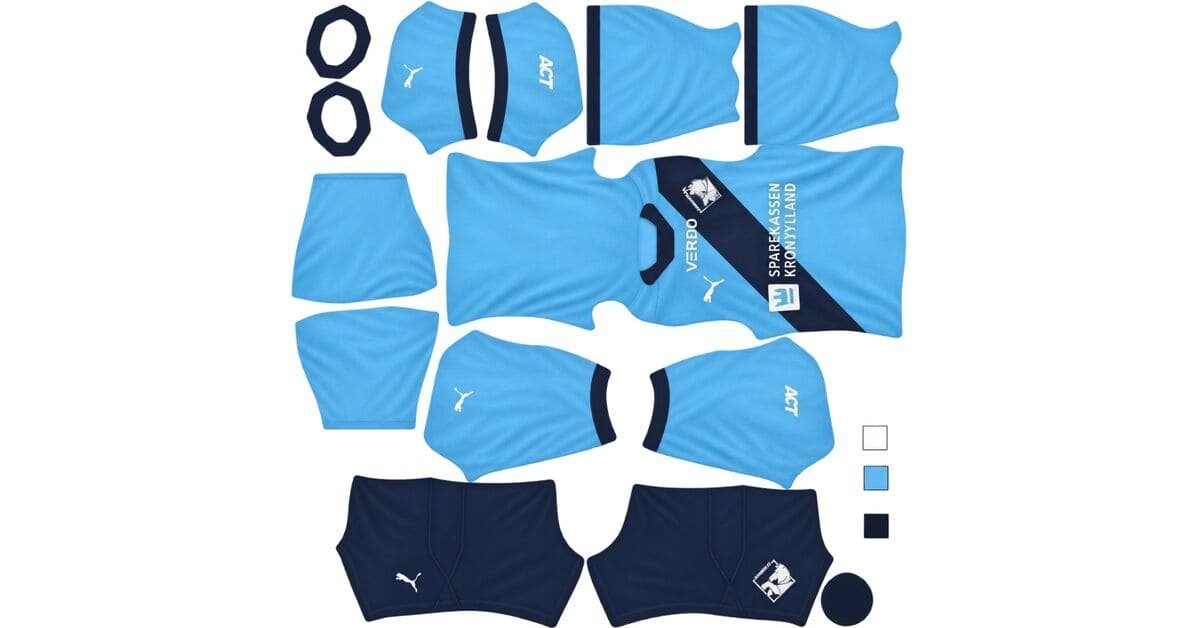
A Randers FC DLS kits URL is a direct link to a 512×512 PNG Randers shirt that you paste into Dream League Soccer. All four slots are below, with each file loaded into the game before it was added here.
Randers FC Logo
Official Logo 512×512 (2026/27)
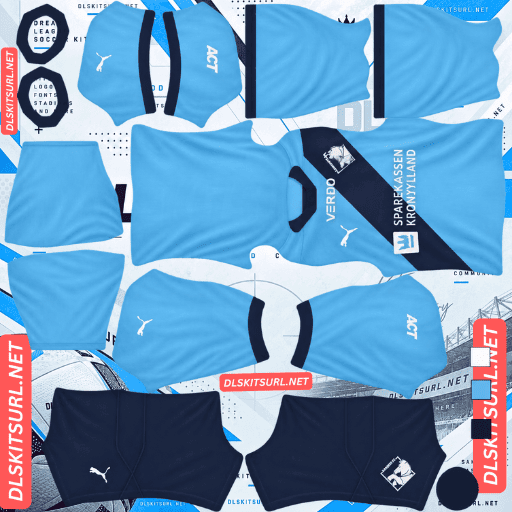
Randers FC Home Kit
Home Kit 512×512 (2026/27)
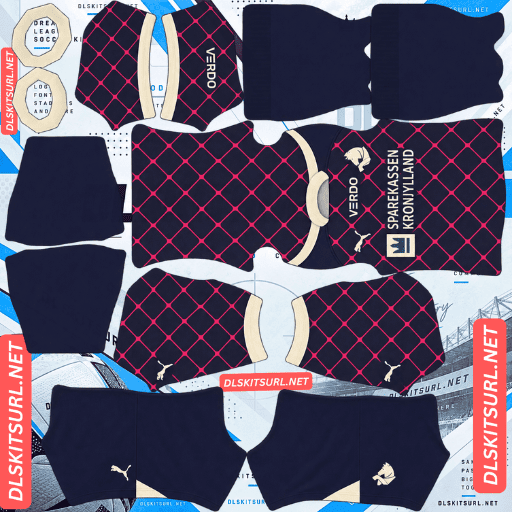
Randers FC Away Kit
Away Kit 512×512 (2026/27)
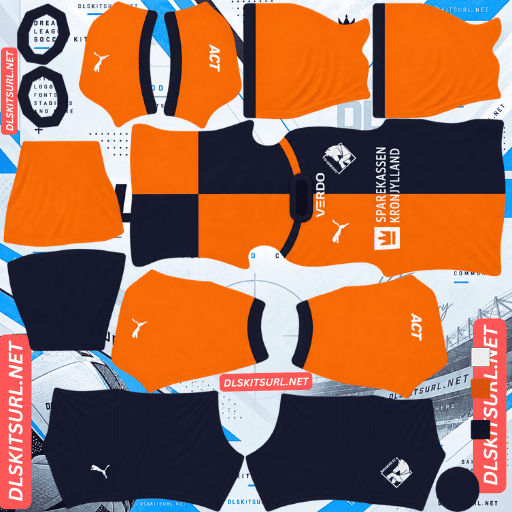
Randers FC Third Kit
Third Kit 512×512 (2026/27)
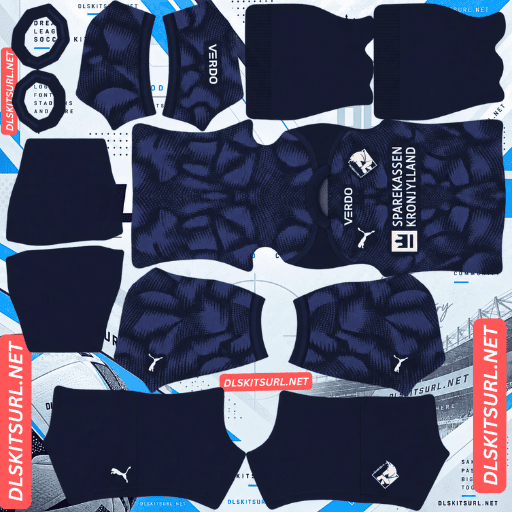
Randers FC GK Home Kit
GK Home Kit 512×512 (2026/27)

Randers FC GK Away kit
GK Away Kit 512×512 (2026/27)
The home kit has an unusual problem: its biggest visual feature is the club crest, and DLS is going to replace that anyway.
When the crest is the headline, you lose the headline
Randers released the 26-27 home on 14 July 2026 through Puma. The design was presented as a clean shirt that stays close to the club’s traditional identity, with the crest prominently placed on the chest alongside the Puma branding and sponsor.
Which tells you the shirt is plain
When the crest is the main feature mentioned in a launch description, there usually is not much else happening across the shirt.
That is actually good for a DLS file.
There is no texture, gradient, tonal pattern or fine graphic for a 512×512 PNG to destroy. The basic shirt should arrive looking much like the original.
The catch is that this also makes the file harder to judge.
And bad news for checking it
A poor file can look just as convincing as a good one when the design itself is this simple.
Instead, check the Puma logo, collar and cuff trim, sponsor and image dimensions. Open the image in a new browser tab and check the actual size rather than trusting the appearance of the preview.
The Puma cat is particularly useful. It is a hard-edged shape without texture, so compression or resizing damage becomes obvious quickly.
Bologna’s away, Monza’s home, Columbus’s home, Servette’s cream away and St. Gallen’s recent kits have the same basic problem: simple designs reproduce easily but give you fewer ways to judge file quality.
But the crest itself will not survive
DLS draws your imported badge onto the chest, replacing whatever crest is already present in the shirt image.
So the element the original Randers shirt is built around disappears as soon as you import your own badge.
That changes where the important work is. On a kit this clean, your badge file matters more than the shirt file.
Spend the time finding a good 512×512 Randers badge rather than comparing nearly identical shirt versions.
Sky blue is a good base
Players are rendered fairly small in DLS, so shirt colour matters at match distance.
Randers’ sky blue is bright and saturated enough to stay separate from the green pitch. It reads as a clear shirt shape rather than a dark mass.
The navy details help too. Navy against sky blue creates a real light-versus-dark difference, so the trim remains visible.
The home is therefore a very readable kit despite its simplicity.
Use navy or white numbers on the home.
The third came out first, and plays better
Both details are worth remembering.
Randers revealed the 26-27 third in April 2026, around three months before the home appeared in July. It uses orange and navy.
Which affects your search
A Randers third file from spring 2026 can be completely current even though the home was not released until July.
That means a file dated early 2026 is not automatically an old kit.
Check the design, not the date.
It is an unusual release order. Most clubs reveal the home first, followed by the away and third.
And orange is one of the best colours here
Orange has a major advantage in DLS: it sits far away from pitch green.
It is bright, warm and easy to pick out when players are small. Against navy, it also creates strong internal contrast.
For practical match visibility, the rough order is:
Yellow: best available
Orange: excellent
White: very good
Sky blue: good
Navy: adequate
Traditional green: poor
That makes the orange-and-navy third marginally the most readable shirt in the Randers range.
The game uses the home slot most often, so swapping the home for the third is worth considering. Randers are simply unusual in having two genuinely good options.
FC Cincinnati, Lorient, Olimpia’s orange third and Envigado benefit from the same basic colour advantage.
What to check
Compare the file with the kit card above and focus on the parts that should survive a 512×512 image:
Any orange-to-navy boundary should remain sharp.
Collar and cuff trim should have clean edges.
Puma branding, crest and sponsor should be crisp.
The image should actually be 512×512.
Use white or navy numbers on the third.
The away
Randers’ 26-27 away was released as part of the same Puma range.
Rather than trusting a filename or an outside description, compare the file directly with the card above. Check the colour boundaries, collar, cuffs, Puma branding, crest, sponsor and dimensions.
With the home built around such a clean approach, there is little reason to expect the away to be a difficult reproduction either. That is good for importing, but it also means the shirt itself is not a demanding quality test.
Which Randers kit survives best?
The home is the easiest to reproduce because its sky-blue-and-navy construction has almost nothing for a 512×512 image to lose. It is a good playing option, but a poor quality test.
The away should be judged directly against its card because its exact construction is the more useful reference.
The third is the strongest file test of the three where orange and navy meet. Those colours have enough contrast that a weak boundary should be obvious, and the third is also the most readable shirt in a match.
Randers run two home versions
This matters when searching for older files because Randers released a second home design in December 2025, catalogued as Home V2. It is a sky-blue-and-navy graphic shirt with Sparekassen as sponsor.
Which means a filename will not settle it
A file labelled “Randers 25-26 home” could refer to either version.
Check the actual design against the source card. One is the original home and the other is the mid-season V2.
The sponsor is another useful clue. Verdo and Sparekassen have both appeared on recent Randers shirts, so the sponsor can narrow the season more effectively than Puma alone.
Randers have used Home V2 designs before as well, including in 23-24 and 24-25. This is not a one-off naming problem.
Lausanne-Sport, Servette, Basel and FC Copenhagen create similar filename confusion this season, although for different reasons.
Watch the back catalogue for green
Randers’ 23-24 third used a green-and-black chevron design and was poorly received by supporters.
Which is the worst possible pairing for this game
Green is already the most awkward base colour because it sits directly against the pitch.
Black makes the problem worse. It is the darkest major colour, so green and black together provide no bright element to rescue the silhouette.
The result is a dark-looking shirt at match distance.
This site has treated green-on-black as the worst visibility combination covered so far, with Sassuolo’s home as the clearest example.
Avoid the 23-24 third unless you specifically want that shirt.
But a chevron reproduces well
The chevron itself is actually a strong shape for a DLS file.
It is a bold angular design that radiates from the chest and continues outwards. Your imported badge can cover part of it, but the shape remains visible on either side.
So you lose a section rather than the entire design.
Lugano’s V, Vélez’s chevron and Brøndby’s chest band behave similarly. Alianza FC’s gothic A and Denmark’s negative-space flag are more vulnerable because the central area is essential to the complete design.
How to tell if a Randers file is current
Four checks make the search much easier:
Puma branding — useful confirmation, but Puma have supplied Randers for several seasons.
Sponsor — Verdo and Sparekassen are useful dating clues.
Third design — the current third should be orange and navy.
Home version — check whether you have the original home or Home V2.
The sponsor is particularly useful because it narrows the timeframe more than the supplier alone.
A note on the Danish season
The Danish Superliga crosses two calendar years, so the current Randers collection is labelled 26-27.
A file labelled simply “2026” could therefore belong to either the 25-26 or 26-27 cycle. The fact that the 26-27 third appeared in spring 2026 makes that ambiguity even worse.
Check the design, not the year.
How to use a Randers FC DLS kits URL
Copy the direct image URL using the copy button on the kit card, not the browser address bar. The browser address usually leads to the page containing the image rather than the image file itself.
In Dream League Soccer, go to My Club → Customise → Kit. Do not open Logo; the badge uses a separate system.
Select the slot first. Then press and hold the URL field, choose Paste, and tap Confirm. Older versions may call that button Download.
The three outfield kits occupy the three normal kit slots, leaving the goalkeeper slot separate.
Because Randers’ shirts are so clean, it is worth putting extra effort into the badge. That is the element that will define the appearance of the kit once imported.
The first custom kit requires a one-time gem unlock. After that, changing custom kits is free.
Test the link first
Open the URL in your browser before entering it into the game.
A proper direct kit link should display the image by itself, and the address should end in .png.
If the page shows headers, buttons or other website elements around the image, you have a viewer page rather than the direct file.
For Randers, the visual preview is not enough to judge the home file because a clean sky-blue shirt can look correct even when the image has been resized or compressed.
Check the dimensions and inspect the Puma logo instead.
Why do Randers kit URLs stop working?
Three common problems account for most broken kit links.
Free image hosts delete files. An old upload can disappear after months or years while the original page or reference remains online. Randers are a mid-sized Danish Superliga club, so the number of available uploads is more limited than for major clubs. Home V2 shirts and older third kits are therefore more likely to become difficult to replace.
Hotlink protection can block DLS. A host may allow the image to load when you open it directly but refuse a request coming from the game. That is why a link can work in your browser and still fail after being pasted into DLS.
The preview and the direct file can be different. A page may display a thumbnail stored on its own server while the copy button points to a separate file elsewhere. The preview can remain visible even after the actual image URL stops working.
For these Randers files, the displayed shirt and copied link are the same file on the same server.
The Randers FC badge
Set the badge during the same session, but choose Logo instead of Kit.
This is especially important with Randers because the shirts are so clean and the crest becomes one of the most noticeable elements.
The Randers badge uses sky blue and navy, with the club name and heraldic elements.
DLS crops imported badges into a circle, so leave clear space around the artwork rather than using a file where the design is already tight against the edges.
The navy and sky-blue combination gives the badge enough value difference to remain readable at the small size used in the game.
The lettering will soften first because of its fine detail. Use a genuine 512×512 badge file rather than enlarging a smaller image.
Keeping your Randers kits
Custom kits are stored on your device rather than tied to your account. Updating the game normally keeps them, but reinstalling the game or moving to another phone can remove the kits and badge.
Because Randers can have two home versions in the same season, record which home design and sponsor you used.
Save all four URLs in a notes app before you start.
FAQ FOR RANK MATH
What is a Randers FC DLS kits URL?
A direct link to a 512×512 PNG Randers shirt that you paste into Dream League Soccer’s kit screen. A working direct image link ends in .png.
The home kit is described around its crest — will that show up?
No. DLS draws your imported badge over the chest area, replacing the original crest. On such a plain shirt, your badge file becomes more important than the original shirt crest.
Does the home reproduce well?
Yes. The clean sky-blue design has no texture, gradient or fine pattern for a flat PNG to lose. That also makes it a poor quality test. Check the Puma logo and the image dimensions.
Which Randers kit plays best?
The orange-and-navy third. Orange is far from pitch green and contrasts strongly with navy. The sky-blue home is also a good playing option, making Randers unusual in having two strong choices.
Why was the third released before the home?
Randers revealed the 26-27 third in April 2026, about three months before the home arrived in July. A spring 2026 file can therefore be current for the third while being too early for the home.
What is a Home V2?
It is a second home design released during the season. Randers have used Home V2 shirts in multiple seasons, so a filename saying only “Randers home” is not enough. Compare the design.
What number colour should I use?
Use navy or white on the sky-blue home. For the orange third, white or navy both provide useful contrast.
Should I use the 23-24 green-and-black third?
Only if you specifically want that shirt. Green is difficult against the pitch, and black gives the combination no bright element, making it one of the weakest visibility choices in DLS.