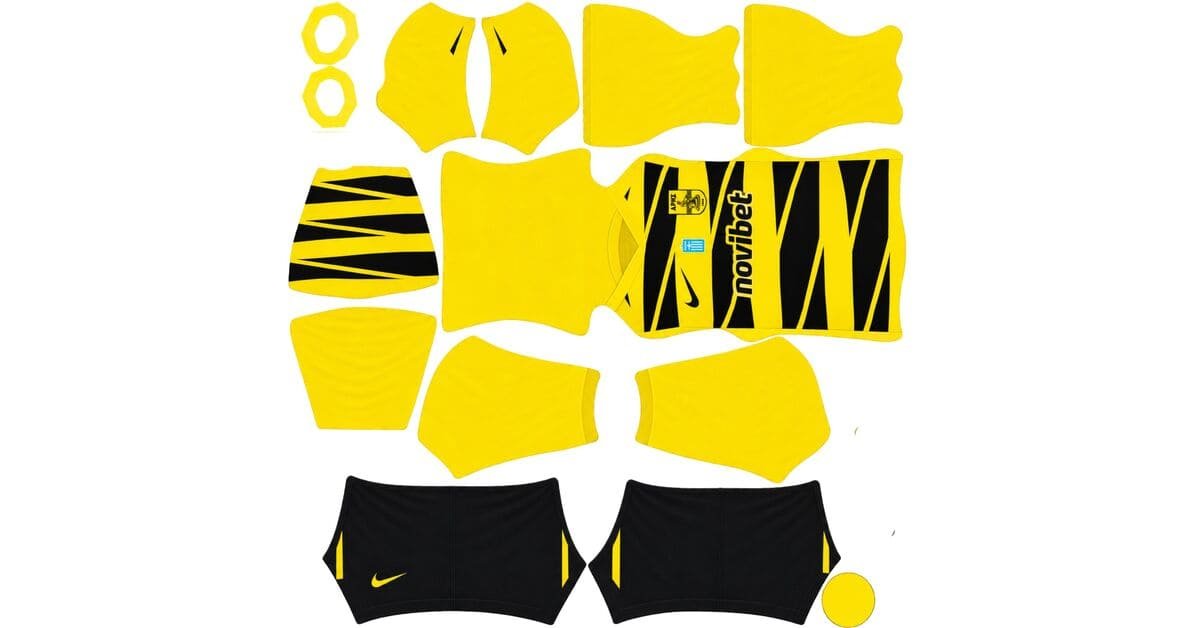
An Aris Thessaloniki DLS kits URL is a direct link to a 512×512 PNG Aris shirt that you paste into Dream League Soccer. All four slots are below, with each file loaded into the game before it was added to this page.
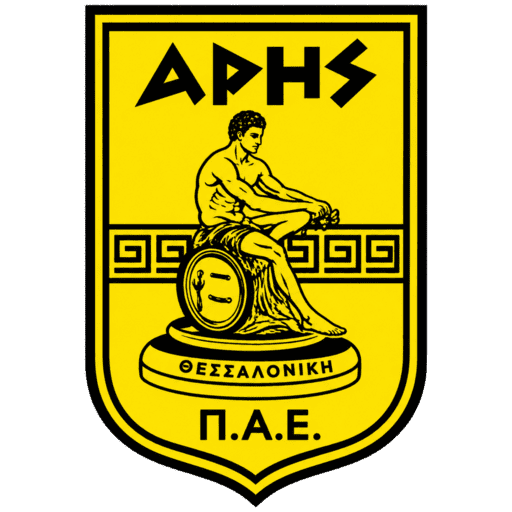
Aris FC Logo
Official Logo 512×512 (2026/27)
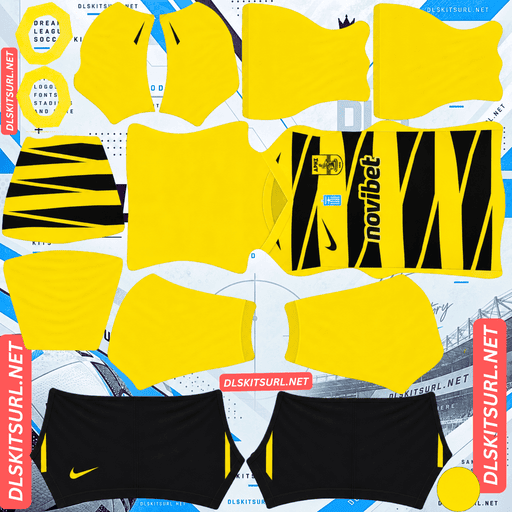
Aris FC Home Kit
Home Kit 512×512 (2026/27)
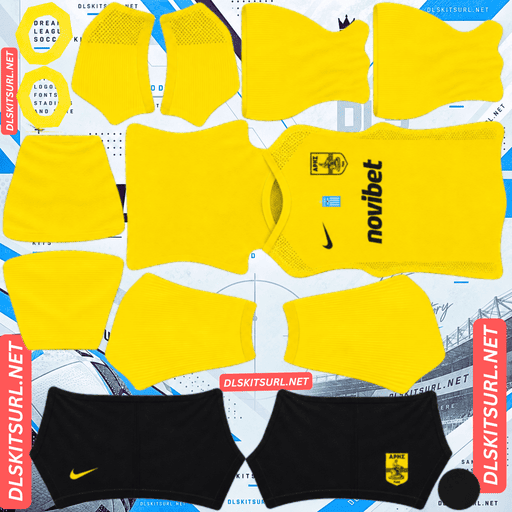
Aris FC Away Kit
Away Kit 512×512 (2026/27)
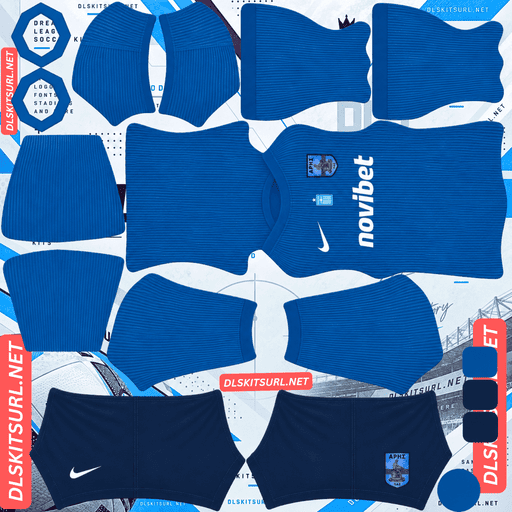
Aris FC Third Kit
Third Kit 512×512 (2026/27)
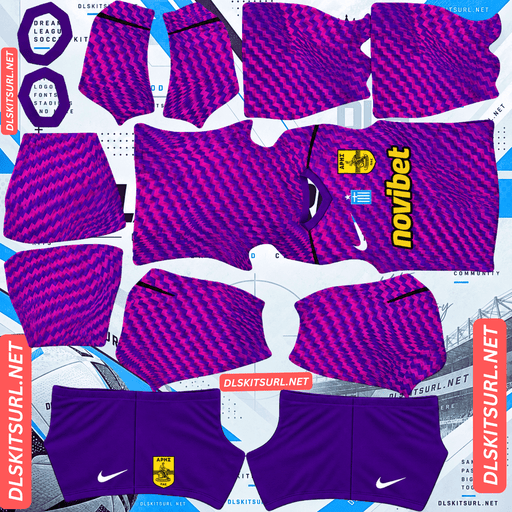
Aris FC GK Home Kit
GK Home Kit 512×512 (2026/27)

Aris FC GK Away Kit
GK Away Kit 512×512 (2026/27)
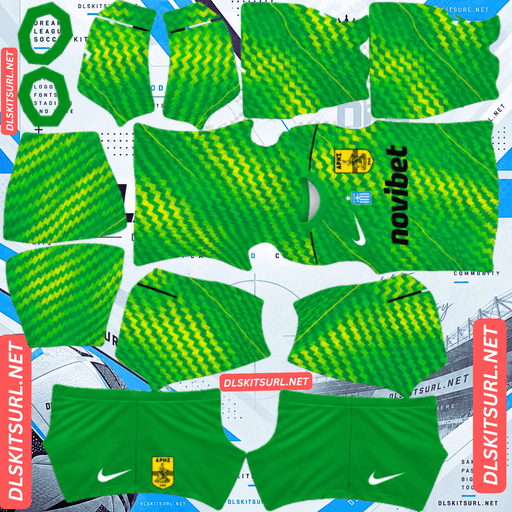
Aris FC GK Third Kit
GK Third Kit 512×512 (2026/27)
The new Aris kits were widely described as a step down from what came before. For a 512×512 DLS file, though, they are actually a step forward — and the reason is worth understanding.
A downgrade on the shirt is an upgrade in the file
Aris moved to Nike for 26-27, replacing Kappa, who had supplied the club with bespoke shirts since 23-24.
The change was criticised as a major downgrade because the new home moves away from custom tailoring and uses a Nike Team catalogue template with a graphic.
For DLS, that is almost the ideal trade.
The game wants exactly this kind of shirt
A catalogue template is built around flat colour and defined panels.
There is nothing here that a 512×512 image fundamentally cannot carry. There is no sublimated texture, woven jacquard, embossed relief or metallic application that needs physical depth to look convincing.
Those are the things bespoke shirts do well in real life. They are also the things that disappear first when a shirt becomes a flat game texture.
So the feature supporters lost is, conveniently, a feature DLS could never reproduce properly anyway.
Aris makes the before-and-after unusually clear
FC Zürich went in the opposite direction, moving from customised teamwear to bespoke Castore designs and gaining fading pinstripes and a topographic map — both difficult features at 512×512.
Greece provides another useful comparison this season, with a bespoke Adidas home existing alongside a stripped-down Tiro 26 template version of the same basic design.
Aris completes the comparison from the other direction: a club moving from bespoke shirts to a catalogue template, with the change criticised by supporters but favourable for image fidelity.
Three different cases point to the same conclusion.
It should also help file availability
Nike Team templates are shared across many clubs.
That means file makers already have the basic shirt construction and only need to reproduce or recolour the relevant design. For a club outside Europe’s biggest leagues, that can make a noticeable difference to the number of usable files available.
AEK Athens, Silkeborg, Alianza FC and Greece benefit from the same template logic.
What to check
Confirm that the image is genuinely 512×512 rather than judging by the size of the preview.
Then inspect the Nike Swoosh. It is a hard-edged shape with no texture, making it one of the quickest ways to spot compression or an undersized source.
Check the collar and cuff trim as well.
The catalogue graphic itself is less useful as a quality test because its bold geometry should survive comfortably at this resolution.
Yellow and black is the best pairing there is
Aris play in yellow and black, the colours behind the Kitrinomavri identity.
Both visibility tests work
DLS renders players relatively small, so the base colour needs to separate clearly from the pitch.
Yellow does that exceptionally well. It sits far enough from pitch green to remain immediately visible.
Then there is the contrast inside the shirt. Black against yellow gives you about the maximum value difference available, so logos, numbers and other defined elements have a strong background to work against.
Most kits get one of those advantages.
Aris gets both.
Combined with a simple Nike template, that makes the home one of the more faithful and readable kits available this season.
Number colour
DLS reads number colours from separate colour swatches on the kit template rather than from the PNG itself. One controls the shirt numbers and another controls the shorts.
On a predominantly yellow shirt, black is the clearest choice and also matches Aris’s secondary colour.
Avoid white. It does not separate strongly enough from yellow.
If the actual design uses both yellow and black in the area behind the number, white or red can become more useful because the number needs to separate from both colours.
The away and third
Aris released a home and away together, with a third following.
Rather than relying on filenames or descriptions elsewhere, compare each file with the actual kit cards above and apply the same checks used for the home.
Expect the same template approach
If the home is built on a Nike Team catalogue template, the away is likely to follow the same basic construction.
That is good news for reproduction.
A simple template has very little hidden texture or physical detail to disappear, so the file should arrive close to the original design. Judge the file by the Swoosh, trim and dimensions, not by expecting the PNG to reproduce fabric construction that was never there.
Be careful with a blue-and-black third
Aris’s 25-26 third was blue with black stripes.
That combination sits at the difficult end of the DLS visibility scale. Blue and black are both relatively dark, so the value difference between the stripes is limited.
The bands have enough width to remain visible, but they can soften together and make the shirt read more like a dark mass at match distance.
That is an unfortunate distinction between real-world design quality and DLS performance: supporters may like a shirt that simply does not have enough contrast to display strongly in-game.
If the 26-27 third follows the same palette, the home or a brighter away is the safer choice for regular rotation.
Inter Milan’s away, Minnesota United’s sash and Auckland FC’s home all sit around the same point on this scale.
Use white numbers on a blue-and-black design.
Which Aris kit survives best?
The home is the clear winner. Its Nike Team construction should arrive intact, while yellow and black give it excellent match-distance visibility.
The away should also reproduce well if it follows the same template, although its final ranking depends on the actual colour arrangement.
The third should survive technically, but its palette matters more than the file quality. If it uses blue and black, expect weaker separation between the stripes.
The yellow-and-black home therefore deserves the home slot regardless of how similar the other versions may look.
Three suppliers in four seasons
Aris have changed kit supplier twice in a short period:
26-27 onward: Nike
23-24 to 25-26: Kappa
22-23 or earlier: Adidas
The supplier logo is a quick dating tool
A Nike Swoosh on an Aris shirt means 26-27 onward.
Kappa points to 23-24 through 25-26.
Adidas indicates 22-23 or earlier.
That makes Aris unusually easy to date. On many clubs, one manufacturer remains for a decade and tells you almost nothing about the exact season. Here, the supplier alone narrows the window considerably.
Check the sponsor as a second marker as well. Novibet appeared on the 25-26 kits.
Central Coast Mariners, Brisbane Roar and Western Sydney Wanderers offer a similar supplier-based dating advantage. Sion, Thun, Odense and Perth Glory do not.
The Kappa years need more caution
Kappa supplied Aris with bespoke shirts, so older files may contain custom treatments that do not translate cleanly to a flat 512×512 image.
A Kappa-era reference can therefore look more detailed than the DLS version.
The Nike-era catalogue approach removes much of that problem.
Aris produce a lot of kits
This matters when searching for older files.
The club had a home, away, third and fourth in 23-24. In 24-25, there was also a pre-season home and a second away. The 25-26 season included a special kit alongside the usual three.
That makes filenames unreliable.
A file called “Aris away” could refer to either of two versions, while “Aris home” might be a league shirt or a pre-season design.
Always compare the actual image against the kit cards rather than trusting the filename.
Lausanne-Sport, FC Copenhagen, Silkeborg and Macarthur create similar problems with multiple versions and special releases.
How to tell if an Aris file is current
Four checks settle the current season quickly:
Nike branding, not Kappa — Nike is new for 26-27.
A Nike Team template appearance rather than bespoke construction.
The sponsor, which can narrow the date further.
Comparison with the cards above, because yellow-and-black Aris shirts can look surprisingly similar across different seasons.
The supplier logo does most of the work.
How to use an Aris Thessaloniki DLS kits URL
Copy the link using the Copy URL button on the kit card, not from your browser address bar. The address bar usually gives you the page containing the image rather than the image itself.
In Dream League Soccer, open My Club → Customise → Kit. Do not choose Logo; that is a separate system for the badge.
Select the kit slot before pasting because whatever slot is active is the one that gets replaced.
Press and hold the URL field, tap Paste, then choose Confirm. Older versions of the game may call the button Download.
The three outfield shirts occupy the three regular kit slots, leaving the goalkeeper slot separate.
Put the yellow home in your home slot. It is the most recognisable Aris design and the strongest combination for visibility.
Set the shorts and socks deliberately as well. DLS treats those areas independently, so do not assume that changing the shirt automatically gives you the exact combination you want.
The first custom kit requires a one-time gem unlock. After that, kit changes are free.
Test the link first
Open the URL in your browser before pasting it into the game.
The image should appear by itself, and the address should end in .png.
If you see a webpage with a header, buttons or other content surrounding the shirt, that is a viewer page rather than the direct image file. DLS cannot use it as a kit URL.
With a template-based Aris kit, the visual test is less demanding than it would be on a textured bespoke shirt.
Confirm the dimensions, inspect the Nike Swoosh and check the collar and cuffs. That gives you most of the information you need.
Why do Aris kit URLs stop working?
Three things commonly break kit links, and only one is immediately obvious.
Free image hosts delete files. An unused upload can disappear after months or years while the published URL remains on the page. Aris have regular European exposure and the shared Nike template makes current designs relatively straightforward for file makers to reproduce, so coverage should be reasonable. Fourth kits, pre-season shirts and special releases are the bigger risks.
Hotlink protection can block DLS. A host may allow the image to load in its own website while refusing requests made directly from another application. That is why a URL can work when you click it in a browser but fail when pasted into the game.
The preview and direct link can be different files. A page may show a thumbnail hosted on one server while its copy button points to another location. The page can continue displaying correctly even after the actual direct file has disappeared.
Here, the shirt shown on the page and the URL you copy refer to the same file on the same server.
The Aris Thessaloniki badge
Set the crest during the same customisation session, but choose Logo rather than Kit when you reach that menu.
Aris’s badge is built around the god of war figure in the club’s yellow-and-black identity.
A recognisable figure works reasonably well at DLS size because its overall silhouette survives even when finer details soften. That loss of detail is a limitation of the game texture, not necessarily a problem with the source file.
Yellow against black gives the badge excellent contrast as well.
DLS crops imported badges into a circle, so leave clear space around the artwork instead of trimming the image tightly.
Use a genuine 512×512 badge file rather than simply enlarging a smaller source.
The badge is particularly useful on a template-based shirt because the catalogue design itself has fewer club-specific details. The crest becomes one of the strongest visual identifiers.
Keeping your Aris kits
Custom kits are stored on your device rather than your account. Updating the game generally keeps them, but reinstalling the game or changing phones can remove the kits and badge.
With Kappa-era files still circulating, make a note that your current versions are the Nike 26-27 kits.
Save all four working URLs in a notes app before importing them.
FAQ FOR RANK MATH
What is an Aris Thessaloniki DLS kits URL?
A direct link to a 512×512 PNG Aris shirt that you paste into Dream League Soccer’s kit screen. A working direct link ends in .png.
The new Aris kits were called a downgrade. Are they worse for DLS?
No. They are arguably better for DLS because Nike replaced Kappa’s bespoke construction with a catalogue template. Flat colour and defined panels survive in a 512×512 image much more reliably than woven, embossed or textured details.
Are bespoke kits generally worse in DLS?
Usually, when their identity depends on physical or subtle surface treatments. Sublimated textures, woven jacquards and embossed relief can disappear in a flat game texture even when the original shirt looks excellent in person.
Does the Nike Team template help file availability?
Yes. The same template is used by many clubs, so file makers already have the basic shirt shape and mainly need to reproduce the club-specific colours and graphics.
Why are yellow and black so effective?
Yellow separates strongly from the green pitch, while black against yellow creates maximum internal contrast. Aris therefore gets both strong base visibility and strong shirt contrast.
What number colour should I use on the yellow home?
Black. It provides the clearest contrast and matches the club’s secondary colour. White is much weaker against yellow.
Should I use the blue-and-black third?
You can, but do not expect it to be as readable. Blue on black has relatively low contrast, so the stripes can soften together at match distance.
How do I date an Aris kit?
A Nike Swoosh means 26-27 onward, Kappa means 23-24 through 25-26, and Adidas means 22-23 or earlier. The rapid supplier changes make Aris unusually easy to date from the manufacturer logo alone.