
A SønderjyskE DLS kits URL is a direct link to a 512×512 PNG SønderjyskE shirt you paste into Dream League Soccer. All four slots are below, with each file loaded into the game before it was added to this page.

Randers FC Logo
Official Logo 512×512 (2026/27)
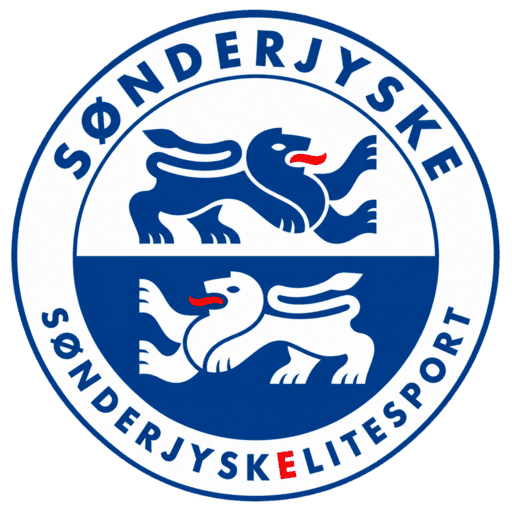
Sønderjyske Fodbold Logo
Home Kit 512×512 (2026/27)

Sønderjyske Fodbold Home Kit
Home Kit 512×512 (2026/27)

Sønderjyske Fodbold Away Kit
Away Kit 512×512 (2026/27)

Sønderjyske Fodbold GK Home Kit
GK Home Kit 512×512 (2026/27)

Sønderjyske Fodbold GK Away Kit
GK Away Kit 512×512 (2026/27)
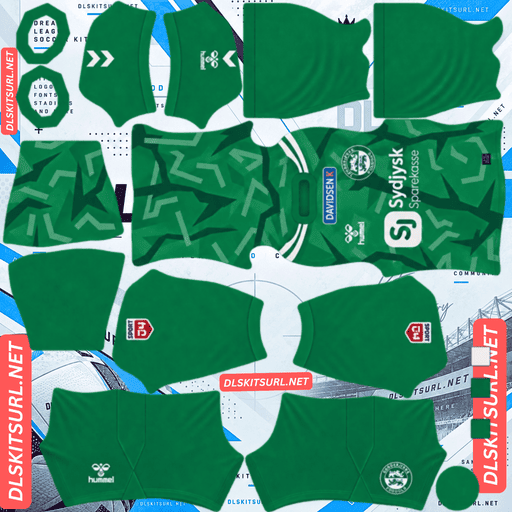
Sønderjyske Fodbold GK Third Kit
GK Third Kit 512×512 (2026/27)
Smaller clubs create a particular problem: sometimes there is almost no published information about the shirt itself. When there is no useful official reference to compare against, you need to judge the file, not guess the design.
Judging a file with no reference
SønderjyskE’s 26-27 home and away were released by Hummel, but there is very little published detail about their exact designs.
That is normal for a club of this size. It does not make the file impossible to check; it simply changes what you look for.
Check the four things that are always true
These checks work regardless of what the shirt actually looks like.
- Check the dimensions. Right-click the image on a computer and open it in a new tab. The browser will report its actual size. For this site, 512×512 is the target. An enlarged 256×256 or 300×300 image will look soft across the entire shirt.
- Find the manufacturer’s signature element. Every kit supplier has a recognizable construction detail, and those repeated shapes are often the first thing to expose a weak file.
- Inspect the collar and cuff trim. Narrow, defined trim is particularly useful because it contains small edges that disappear quickly when an image has been resized or compressed.
- Check the crest and sponsor edges. Hard shapes should have hard boundaries. If logos look smeared, the file is probably not a genuine 512×512 source.
If those four areas are clean, the file is doing its job even if there is no official shirt image available for comparison.
On a Hummel kit, the chevrons are the test
Hummel’s signature chevrons run across the shoulders and down the sleeves as repeated small shapes.
That makes them one of the best quality gauges on any Hummel shirt.
Count the individual chevrons.
If you can distinguish them separately, the file has enough resolution to carry the detail. If they have merged into one continuous stripe, the image is undersized or too heavily compressed.
SønderjyskE have used Hummel for around two decades, so this check applies to a large part of the files you are likely to encounter.
Odense Boldklub, AC Horsens, Brøndby and Denmark provide the same Hummel test, while Nordsjælland, Esbjerg, Le Havre and Bournemouth give you further examples of the same manufacturer detail.
And apply the launch-copy rule where you can find one
When a description does exist, its wording can tell you what the 512×512 file will preserve.
A template, teamwear or competition description usually points toward a design that reproduces very well.
Clean, classic or traditional usually means the shirt will reproduce well too, although those words do not tell you much about file quality.
Words such as bespoke, sublimated, tonal, jacquard, embossed or 3D knit are different. They usually describe the very features that disappear from a flat PNG.
Likewise, subtle, shadow, relief and metallic effects are likely to be absent or heavily simplified.
AC Horsens and Silkeborg IF show the two ends of that spectrum this season.
Blue and white is a good starting point
SønderjyskE play in blue and white, which gives them a strong base for DLS.
Both halves work
Players appear relatively small during matches, so the important question is how clearly the shirt separates from the pitch.
Blue provides a clear break from pitch green.
White goes even further. It is the brightest major shirt colour and has no problem blending into the grass.
Then there is the contrast between the two colours themselves.
Blue against white gives maximum contrast, so the two halves remain easy to distinguish even when the player is distant.
That means SønderjyskE start with a useful advantage regardless of the exact 26-27 construction.
Number colour
DLS gets number colours from separate small swatches in the kit settings rather than reading them from your PNG.
One swatch controls shirt numbers and another controls shorts numbers.
Use white numbers on a blue shirt, and navy or red on a white shirt.
White numbers on white are invisible. The shirt preview will not necessarily warn you because the number colour is applied separately in the game.
There is no third kit this season
This is worth knowing because it leaves one of the three outfield slots available.
SønderjyskE have released a home and away for 26-27, with no third kit. The same was true in 25-26.
Which gives you three options
The first option is the 26-27 pre-match shirt. DLS does not care whether a garment was originally designed for match use; if you have a working 512×512 PNG, it can be imported.
The second is the 24-25 third, which is the most recent genuine third kit from the club.
The third option is a track top. Two were catalogued for 26-27, alongside a pre-match jacket.
Trackwear generally uses flat colours and defined panels, so it should reproduce well. The problem is availability: non-match pieces are photographed less often and therefore generate far fewer usable DLS files.
Whatever you choose, use the Hummel chevrons as the quality check.
And prefer something light
If both current shirts are heavily blue-based, a lighter third option gives you much more variety during matches.
The game uses your home slot most often, so if one of the two current kits is predominantly white, putting that one in the home slot can improve match visibility.
St. Gallen and Viborg offer the same solution for clubs whose traditional colours are harder to distinguish from the pitch.
Which SønderjyskE kit survives best?
The current home and away cannot be ranked by reproduction quality from the design description alone, because there is not enough published information about their exact construction.
What can be judged consistently is the file itself: check the Hummel chevrons, dimensions, collar and cuffs, then inspect the crest and sponsor edges.
The blue-and-white palette gives both shirts a strong visibility starting point.
The second-tier seasons are the hard ones
This matters if you start looking backward through the SønderjyskE archive.
SønderjyskE spent 22-23 and 23-24 in the Danish First Division before returning to the Superliga.
Which thins those years considerably
Kit sites tend to document top-flight clubs far more thoroughly than second-tier teams.
That makes files from those two seasons noticeably harder to find, including the 23-24 third and the Home 2 and Away 2 variants used that year.
Current shirts are easier to locate now that SønderjyskE are back in the Superliga.
Odense Boldklub, AC Horsens and Viborg have faced similar availability problems. Vaduz has the same issue from the opposite direction after returning to the top division.
And the club is small either way
Even in the Superliga, SønderjyskE generate considerably less upload volume than clubs such as Copenhagen, Brøndby or Midtjylland.
That makes working links worth keeping.
If you find a good file, save it rather than assuming you will easily find the same one again.
Watch for a Southern Jutland design
There is another useful clue when searching the back catalogue.
SønderjyskE’s 20-21 home was inspired by Southern Jutland’s return to Denmark and the centenary of the 1920 reunification.
Which is a theme rather than a texture, and that helps
Historical themes are usually expressed through colours, symbols or bold graphic references.
Those elements reproduce much better than physical fabric effects or subtle surface treatments.
What does not survive is the commemorative wording.
Text on the chest can be covered by the imported badge. Text on the upper back can occupy the same area used by the squad number. A small hem marking becomes too small to read, while inside-collar text is not mapped onto the DLS kit image.
All four locations are poor places to judge whether a file is complete.
Denmark’s collar text, AGF’s 1880 tribute, Midtjylland’s motto and Unión de Santa Fe’s 1996 reference all face the same limitation.
How to tell if a SønderjyskE file is current
Four checks are the most useful:
Hummel branding — useful confirmation, but Hummel have supplied the club for many years and therefore do not date the shirt by themselves.
Sponsor — the sponsor is the strongest available dating clue.
Compare against the kit cards — especially important because detailed published descriptions are limited.
Third-kit status — a SønderjyskE third points to 24-25 or earlier, since the club has not used one in the last two seasons.
The fourth point is particularly useful when searching older files.
SønderjyskE are one of the harder clubs to date because there is no recent supplier change to provide an obvious dividing line. The actual shirt design and sponsor therefore matter more than the filename.
A note on the Danish season
The Danish Superliga runs across two calendar years, so the current SønderjyskE collection is labelled 26-27.
A file labelled simply “2026” could belong to either the 25-26 or 26-27 season.
Check the design, not the year.
How to use a SønderjyskE DLS kits URL
Copy the link using the button on the kit card, not the browser address bar. The address bar normally gives you the page containing the image rather than the direct PNG.
Open Dream League Soccer and go to My Club → Customise → Kit.
Do not select Logo. The badge is handled separately.
Choose the slot before pasting. Press and hold the URL field, tap Paste, then select Confirm. Older versions may call that button Download.
With only a home and away in the current range, the third slot is available for the pre-match shirt, a 24-25 third or a track top.
Set the shorts and socks deliberately. DLS treats those areas separately, so the default colours may not produce the intended complete kit.
The first custom kit requires a one-time gem unlock. After that, changing custom kits is free.
Test the link first
Open the URL in a browser before entering it into the game.
The image should appear by itself, and the address should end in .png.
If you see a webpage with headers, buttons or other elements surrounding the shirt, you have a viewer page rather than the direct image.
With little published information about the actual designs, the Hummel chevrons become particularly important.
Count them, inspect their edges, and confirm the image dimensions.
Why do SønderjyskE kit URLs stop working?
Three things commonly break kit links.
Free image hosts delete files. Older uploads can disappear after months or years while the original page remains visible. SønderjyskE are one of the smaller Danish Superliga clubs, so upload volume is limited compared with the country’s biggest teams. Older second-tier shirts and non-match pieces are the biggest risks.
Hotlink protection can be switched on. A host may allow the image to load in a normal browser but reject the request from DLS. That is why a URL can work when you click it and fail when you paste it into the game.
The preview and the direct file can be different. A page may display a thumbnail from one location while the copied URL points to another file. The page can continue working even after the direct image disappears.
For these files, the shirt shown on the card and the URL you copy are the same file on the same server.
The SønderjyskE badge
Set the crest during the same session, but choose Logo instead of Kit.
The SønderjyskE badge uses the club’s blue-and-white palette together with the club name and regional elements.
DLS crops imported badges into a circle, so leave clear space around the entire design rather than using an image that is already tightly cropped.
Blue against white provides maximum contrast, which gives the badge a good chance of remaining readable at the small size used beside the score.
Fine lettering will soften first, so use a genuine 512×512 badge file rather than enlarging a smaller source.
On a sparsely documented club, the badge is especially important because it is one element you can verify independently. A clear crest is more useful than trying to judge an undocumented shirt from memory.
Keeping your SønderjyskE kits
Custom kits are stored on your device rather than in your account. Updating the game normally keeps them, but reinstalling it or changing phones can remove the kits and badge.
SønderjyskE files are harder to replace than those of the country’s biggest clubs, so save working links when you find them.
Paste all four URLs into a notes app and record the season beside each one.
FAQ FOR RANK MATH
What is a SønderjyskE DLS kits URL?
A direct link to a 512×512 PNG SønderjyskE shirt that you paste into Dream League Soccer’s kit screen. A working direct image link ends in .png.
How do I check a file when there is no reference image?
Check the dimensions, Hummel’s signature chevrons, the collar and cuffs, and the edges of the crest and sponsor. If those hard details are clean, the file is likely doing its job even without an official reference image.
Why are Hummel’s chevrons important?
They are small repeated shapes across the shoulders and sleeves. Because they are fine and high-contrast, they expose resizing and compression damage before larger areas of the shirt do.
Is there a third kit for 26-27?
No. SønderjyskE have a home and away, leaving the third slot available for the 26-27 pre-match shirt, the 24-25 third or one of the club’s track tops.
Is blue and white good for DLS?
Yes. Blue separates clearly from pitch green, white is highly visible, and the two colours provide maximum internal contrast.
What number colour should I use?
Use white on a blue shirt and navy or red on a white shirt. Avoid white numbers on a white shirt because they disappear.
Why are the 22-23 and 23-24 kits harder to find?
SønderjyskE spent those two seasons in the Danish First Division, where kit coverage and file availability are generally thinner than in the Superliga.
Will a commemorative SønderjyskE design reproduce?
Bold colours and symbols should. Small commemorative text or dates generally will not, especially when placed on the chest, upper back, hem or inside the collar where DLS either covers, shrinks or does not map the detail.