
A Unión de Santa Fe DLS kits URL is a direct link to a 512×512 PNG Tatengue shirt that you paste into Dream League Soccer. All four slots are below, with each file loaded into the game before it was added here.
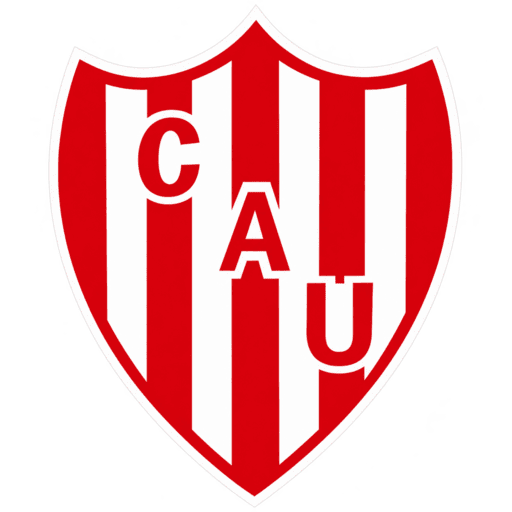
Union de Santa Fe Logo
Official Logo 512×512 (2026/27)

Union de Santa Fe Home Kit
Home Kit 512×512 (2026/27)

Union de Santa Fe Away Kit
Away Kit 512×512 (2026/27)
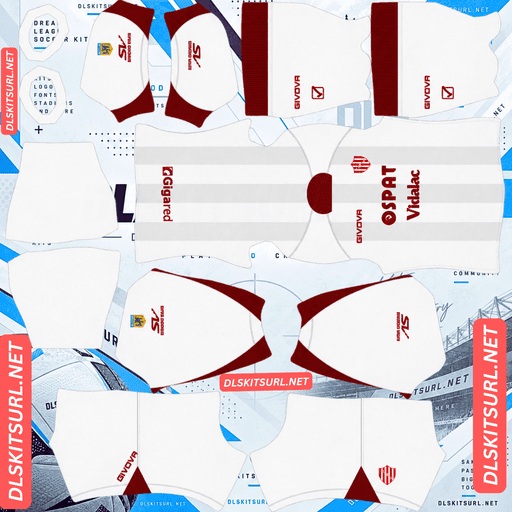
Union de Santa Fe Third Kit
Third Kit 512×512 (2026/27)
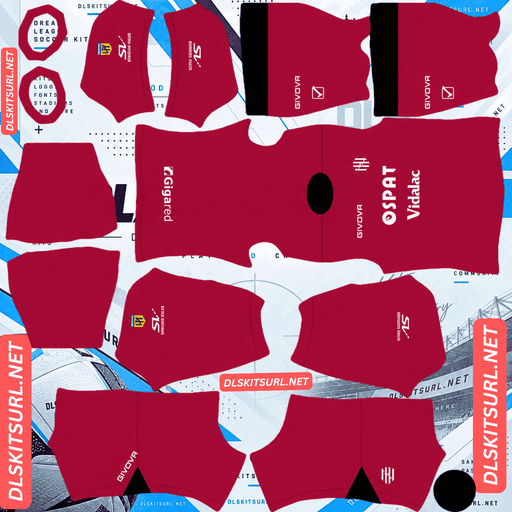
Union de Santa Fe GK Home Kit
GK Home Kit 512×512 (2026/27)
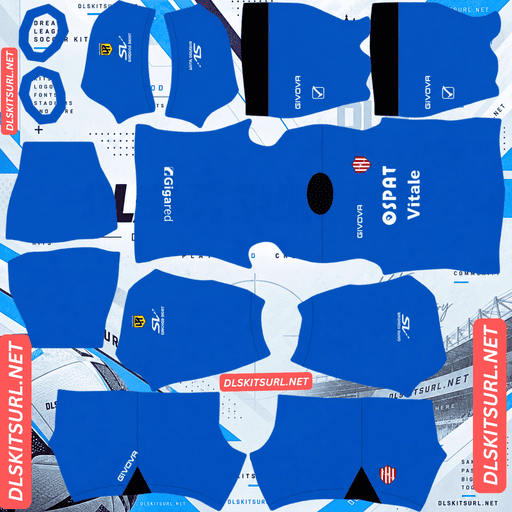
Union de Santa Fe GK Away Kit
GK Away Kit 512×512 (2026/27)
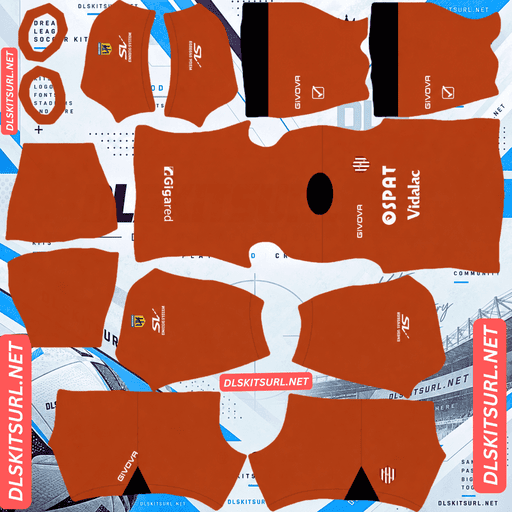
Union de Santa Fe GK Third Kit
GK Third Kit 512×512 (2026/27)
Unión’s 2026 range makes an unusually useful comparison: the home and special kits use the same red-and-white palette, but one relies on broad stripes while the other uses fine pinstripes. That difference tells you much more about file quality than the colours do.
Two stripe widths, one palette
The home uses Unión’s broad red and white stripes. The 2026 special keeps the same colours but reduces them to fine red pinstripes over white.
Same palette. Same season. Different demands on a 512×512 file.
Contrast is only half the test
Contrast decides whether a detail can be seen at all. Resolution decides how fine that detail can be.
Red against white is about as strong as the contrast gets, so neither Unión shirt has a colour problem. The difference comes from stripe width.
The broad home stripes survive from almost any reasonably usable file. The special’s fine pinstripes are much less forgiving and need a genuine 512×512 image to remain separate.
The same pattern has shown up across the pinstripe kits covered on this site. Argentinos Juniors, Heidenheim, Boca’s away, Sassuolo’s third and Monterrey’s third all use contrasting colours, and their pinstripes survive because the lines have both enough contrast and enough pixels.
Even then, the margin is narrow. A genuine 512×512 file keeps Unión’s red lines distinct. An enlarged or undersized version can turn them into a soft pink wash.
The special gives you the better file test
Open the special at full size and look closely at the shirt.
If you can count individual red lines, the file is doing its job. If the lines have merged into a soft wash, it is undersized.
Then check the home. Its broad stripes will probably look correct either way. That is exactly why the home is a poor resolution test and the special is a good one.
Confirm the actual dimensions as well. On a computer, open the image directly and check the image information rather than assuming that a large-looking preview is really 512×512.
The home honours the 1996 promotion
Presented in early 2026, Unión’s home marks thirty years since the club’s 1996 promotion to the Primera División.
The stripe construction is almost ideal for DLS
Vertical stripes are forgiving geometry. They run down the shirt rather than having to meet at complicated angles, so the template has relatively little work to do to keep them aligned.
Red and white also provide maximum contrast.
That makes the home one of the safest Unión kits to reproduce. The design itself is not fighting the file.
América de Cali’s away, Rosario Central’s home and Boca Juniors’ home work on the same basic principle: strong colour separation combined with straightforward stripe geometry.
The anniversary detail is a different story
A shirt built around a thirty-year commemoration will usually place some of that reference in a specific location.
Check the source file carefully if you want to know what was actually included:
Chest: the imported badge can cover it.
Upper back or neck: this is one of the smallest-resolution areas and also where squad numbers are drawn.
Hem: rendered at a small size and partly covered by the shorts.
Inside the collar: the DLS template does not map the interior surface.
In other words, all four locations are effectively unreachable in normal play. If the 1996 reference is a small inscription or fine graphic, losing it does not necessarily mean the file is bad.
The same limitation affects Fiorentina’s centenary mark, Alianza Lima’s anniversary details, Columbus’ founding tribute, América de Cali’s 1927 date and Nacional’s collar inscription.
Visibility
Dream League Soccer renders players at a relatively small scale, so the shirt also has to work against the pitch.
Red separates strongly from green, while white gives the shirt a bright base with no blending problem. The alternating stripes keep contrast running through the whole shirt rather than leaving one large block of colour.
That makes the home the most readable kit in the Unión range.
Number colour
Dream League Soccer takes number colours from the kit’s separate in-game swatches, not from the imported PNG. There is one swatch for shirt numbers and another for shorts.
For the striped kits, navy or black is the safest choice.
Red and white would each disappear into part of the shirt, especially on the back where the stripes continue. A third dark colour gives the numbers a consistent outline against both halves.
The same logic applies to the special, even though its pinstripes are much thinner.
The special kit is the one worth finding
Givova released the special as a limited-edition shirt, and it debuted against Defensa y Justicia at the Estadio 15 de Abril.
Its design is deliberately restrained: a white base, fine red vertical pinstripes, a retro polo collar with red trim and matching sleeve cuffs.
The mid-century construction helps
Designs from that period tend to rely on flat colour and defined shapes rather than gradients, sublimated textures or tonal effects.
That works extremely well at 512×512.
The pinstripe width is the only part that really demands attention. The collar and placket are also defined red shapes against white, giving them the contrast that collar details often lack in DLS.
Boca’s 06-07 revival, Schalke’s 1980s Trefoil away, Tolima’s Racing tribute and Grasshoppers’ 1989-90 third survive for much the same reason: the design is built from clear shapes rather than effects that disappear during downscaling.
Limited editions disappear from circulation quickly
One-off shirts usually receive a burst of attention when they launch and then become much harder to find.
Unión is also a mid-sized Argentine club with less international upload coverage than the country’s biggest sides.
If this special is one you want, it is worth keeping the working URL now rather than assuming another copy will always be available.
Basel’s Carnival kit, Grasshoppers’ limited edition, Palmeiras’ Avanti shirt and FC Zürich’s 130th anniversary kit have the same problem.
The alternate honours Estanislao López
Unión’s 2026 alternate pays tribute to Brigadier Estanislao López, around the 240th anniversary of his birth. Its concept connects the shirt with Santa Fe’s federal identity and the Dragones de la Independencia.
A historical theme is easier to reproduce than a fabric effect
A kit built around a historical figure or provincial identity can express that idea through colour, symbols and large shapes.
Those elements survive much better than woven texture, gradients or tiny ornament.
Compare the file against the kit card and check the basics:
Any boundary between colours should remain sharp.
Collar and cuff trim should have clean edges.
Givova branding, the crest and sponsor should remain defined.
The image should actually be 512×512.
Watch the direction of any sash
If the alternate uses a sash or another diagonal element, check its direction before importing.
A sash running from one shoulder to the opposite hip can be mirrored very easily. A mirrored file can still look completely convincing when viewed flat, but it will be wrong once you compare it with the original design.
Any small inscription or dedication should also be treated cautiously. If it sits in a tiny area, the game may simply not retain it.
Which Unión kit survives best?
Home: The broad red-and-white stripes are the easiest to reproduce and also give the best match-day visibility. They are forgiving enough that even a mediocre file can look convincing, so use the collar, branding, crest and dimensions as the real quality checks.
Alternate: The Estanislao López tribute needs to be compared directly with the kit card. Large colour blocks and symbols should survive well; tiny historical wording may not.
Special: The white shirt with fine red pinstripes is the strongest test of the actual file. Individual lines should remain visible at genuine 512×512 resolution, and the clean contrast gives it strong visibility once imported.
Two anniversary ideas in one season
This is worth remembering when searching for Unión files.
The home marks thirty years since the 1996 promotion, while the alternate is tied to Estanislao López’s 240th anniversary.
Unión also produced special and third shirts in 2025 and has a history of commemorative releases, including a limited run of a thousand shirts for an earlier anniversary.
The filename is not enough
A file labelled “Unión 2026 special” or “Unión anniversary” does not tell you which shirt you are getting.
Compare the actual design with the cards above instead of trusting the filename.
Servette, Luzern, New Zealand and Alianza Lima create similar naming problems because several commemorative or alternate designs can circulate under overlapping labels.
How to tell if a Unión file is current
Four checks make the current range easy to identify:
Givova branding — Givova has supplied Unión for several seasons, so the manufacturer alone does not date the shirt.
The home’s broad red-and-white stripes should match the 1996 promotion concept.
The special is white with fine red pinstripes and a retro polo collar.
Compare the file with the kit cards above, especially because Unión’s striped home can resemble earlier seasons at a glance.
The third check is the quickest. That special has a very distinctive construction.
A note on Argentine season labels
The Argentine season runs within a calendar year, with Apertura and Clausura tournaments.
That means a Unión file labelled 2026 is current. European clubs often use 26-27 or 2026-27 labels instead, so applying that convention here can make a correct Argentine file look outdated when it is not.
For Unión, check the design before judging the year in the filename.
How to use a Unión de Santa Fe DLS kits URL
Copy the direct image link with the button on the kit card, not from the browser address bar. The address bar usually points to the webpage containing the image rather than the image itself.
In Dream League Soccer, open My Club → Customise → Kit. Logo is a separate section.
Select the slot first. Then press and hold the URL field, tap Paste, and choose Confirm. Older versions may call that button Download.
You have three outfield kit slots, so the home, alternate and special already fill the available spaces if you want to use all three. A 2025 third or another older design then becomes a rotation choice.
The first custom kit requires a one-time gem unlock. After that, changing the kit itself is free.
Test the link before importing
Open the copied URL in a browser first.
The shirt should appear as an image by itself, and the address should end in .png. If you see a page with headers, buttons or other content around the shirt, you have a viewer page rather than a direct file.
For Unión, the special pinstripes are the useful visual test. Individual lines should remain distinct.
The home is much less useful visually because broad red-and-white stripes can look convincing even when the source image is poor. Check the actual dimensions and inspect the collar, cuffs and branding instead.
Why do Unión kit URLs stop working?
Three problems account for most broken kit links.
Free image hosts can delete old files. A URL may remain in an article long after the underlying upload has been removed. Unión has reasonable domestic coverage, but it does not have the international upload volume of Argentina’s biggest clubs. The limited-edition special is therefore the one I would preserve first.
Hotlink protection can also be enabled. The host may allow the image to load in its own website while refusing a request coming from the game. That produces the confusing situation where a URL works in your browser but fails inside DLS.
The preview and direct file can be different. A webpage may display a locally cached thumbnail while the copy button points to another file or server. The page can continue working even after the direct image disappears.
Here, the shirt shown on the card and the copied URL are the same file on the same server.
The Unión de Santa Fe badge
Set the badge separately through My Club → Customise → Logo.
Unión’s crest uses the club’s red and white colours with the interlocked CAU monogram.
That bold monogram is generally well suited to DLS. The weakness is the overlapping lettering: when the badge is rendered small, the individual letters can soften into one shape.
Use a genuine 512×512 badge file rather than enlarging a smaller source.
Red against white provides excellent contrast, but remember that DLS crops imported badges into a circle. Leave clear space around the crest so the circular crop does not cut into the outer edges.
Nacional de Montevideo, Rosario Central and Boca Juniors have similarly strong monogram-based crests, with the same general advantage and small-size limitation.
Keeping your Unión kits
Custom kits are stored on the device rather than attached to your account.
An update will normally leave them in place, but reinstalling the game or changing phones can remove the imported kits and badge.
With two commemorative designs and a limited-edition special in the same season, Unión’s files are especially easy to mix up. Save all four URLs somewhere outside the game and label each one by season and kit name before importing.
FAQ FOR RANK MATH
What is a Unión de Santa Fe DLS kits URL?
A direct link to a 512×512 PNG Tatengue shirt that you paste into Dream League Soccer’s kit screen. A working direct image link ends in .png.
Why do the home and special kits behave differently?
They use the same red-and-white palette, so contrast is strong on both. The difference is stripe width: broad stripes survive from almost any usable file, while fine pinstripes need a genuine 512×512 source to remain distinct.
How do I check the Unión special kit file?
Open it at full size and look at the pinstripes. If you can distinguish individual red lines, the file is doing its job. If they have merged into a soft pink wash, the source is likely undersized or has been enlarged.
Can I use the same test on the home?
Not effectively. Its broad stripes are too forgiving, so even a poor file can make them look correct. The special is the better resolution test.
Will the 1996 promotion tribute show up in DLS?
Small commemorative details may not. If the reference sits on the chest, upper back, hem or inside the collar, it can be covered, rendered too small or fall outside the mapped surfaces.
What should I check on the Estanislao López alternate?
Compare it with the kit card and pay particular attention to any sash or diagonal. A mirrored file can look perfectly plausible while running in the wrong direction. Also check the collar, cuffs, Givova branding, crest, sponsor and dimensions.
What number colour should I use?
Navy or black is the safest choice for the striped kits. Red and white can each disappear into parts of the shirt, while a dark third colour remains readable across both stripe colours.
Why might the Unión special kit be difficult to find?
It is a limited-edition shirt, and one-off releases often receive a lot of attention when launched before becoming much less common in circulation. Saving a working direct URL is worthwhile.