
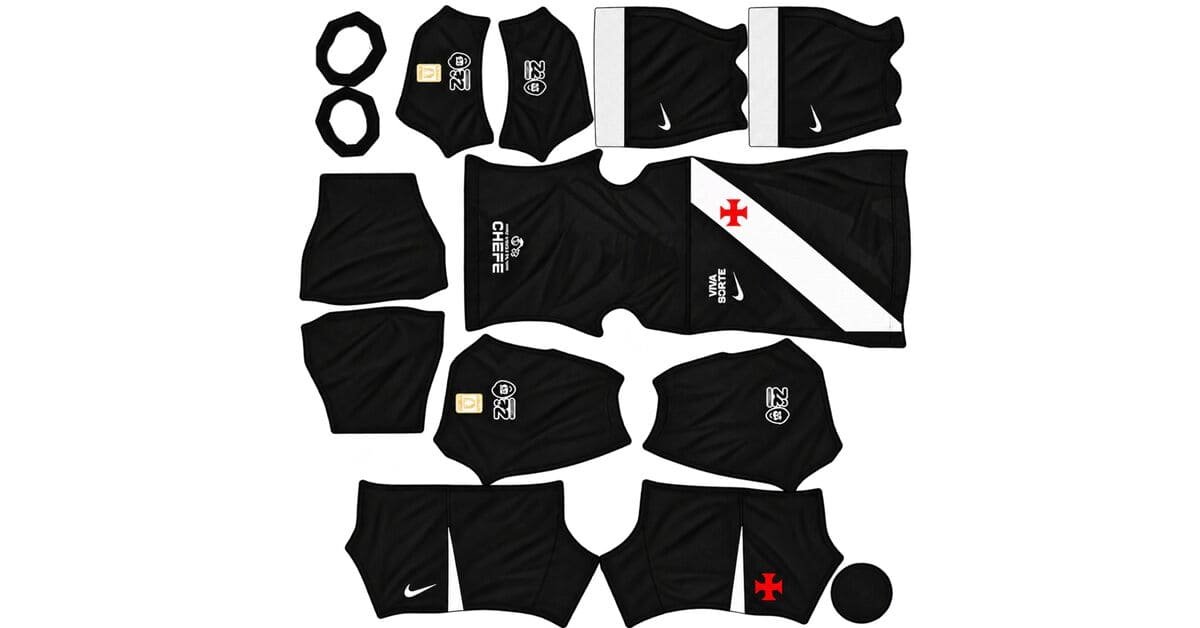
A Vasco da Gama DLS kits URL is a direct link to a 512×512 PNG shirt that you can import into Dream League Soccer. All four kit slots are included below, and each image has been loaded into the game before publication.
CR Vasco da Gama Logo
Official Logo 512×512 (2026/27)
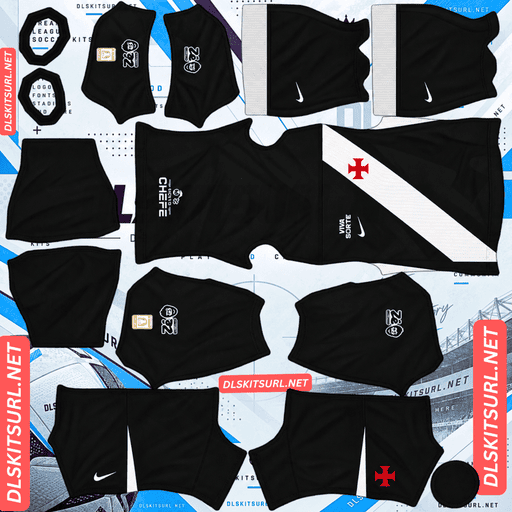
CR Vasco da Gama Home Kit
Home Kit 512×512 (2026/27)
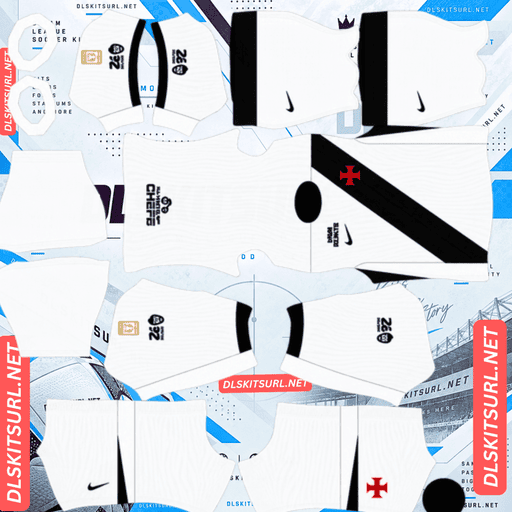
CR Vasco da Gama Away Kit
Away Kit 512×512 (2026/27)
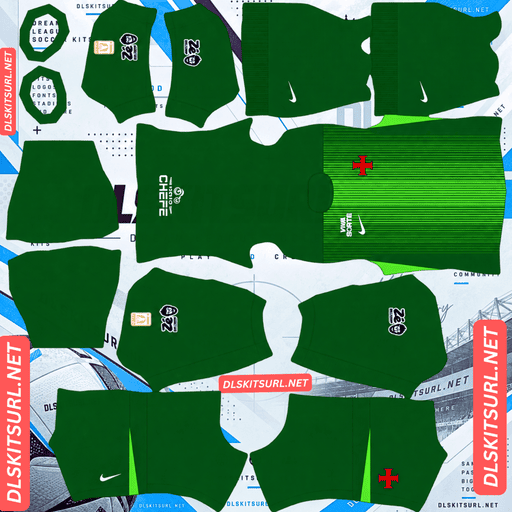
CR Vasco da Gama GK Home Kit
GK Home Kit 512×512 (2026/27)
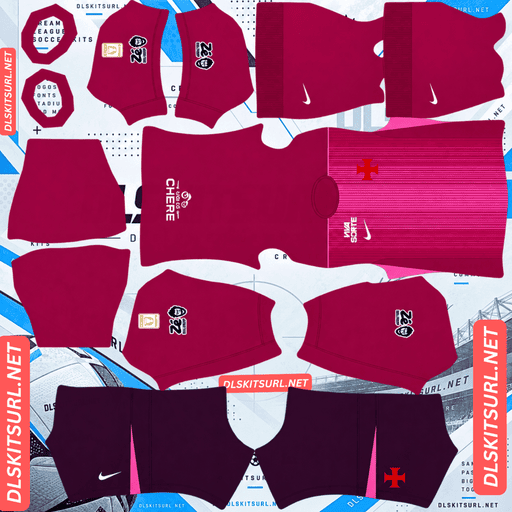
CR Vasco da Gama GK Away Kit
GK Away Kit 512×512 (2026/27)
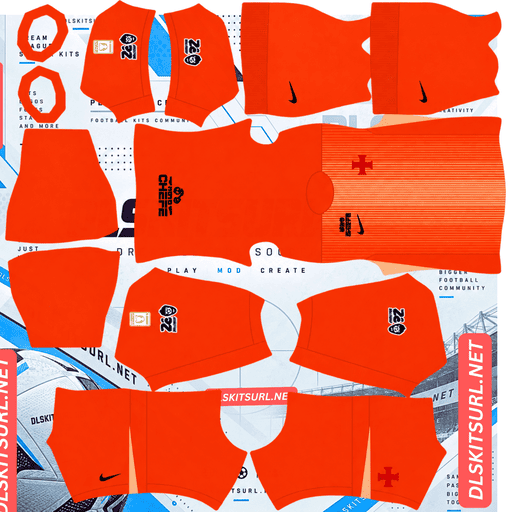
CR Vasco da Gama GK Third Kit
GK Third Kit 512×512 (2026/27)
Vasco da Gama’s diagonal sash is one of the most recognisable designs in Brazilian football. It is also one of the trickiest patterns to reproduce accurately in a DLS kit file. Fortunately, checking whether the sash is aligned correctly takes only a few seconds.
Why Is the Sash the Hardest Design to Reproduce?
The main challenge is that a diagonal band has two edges, and both must maintain the correct position and angle wherever they cross a seam.
Vasco’s sash runs from the left shoulder to the right hip. The home shirt features a white sash on black, while the away shirt reverses the colours with a black sash on white.
Comparing the Sash With Other Kit Patterns
Different kit designs place different demands on an imported image:
Vertical stripe: Its position needs to match along one main reference line — the centre.
Horizontal band: Its position must remain consistent across the front, side seams and sleeves.
Diagonal split: Its position and angle must match wherever the split crosses a boundary.
Diagonal sash: Both parallel edges must maintain the correct position and angle across every boundary they cross.
Monaco’s diagonal split was the previous benchmark on this site, but Vasco’s sash is more demanding. A split has one main edge to align, while a sash has two independent edges that must both line up correctly.
The design also continues across the back of the shirt. That means the side seams and rear panel must align with the front rather than interrupting the band.
Resolution Is Not the Main Problem
There is one useful advantage to Vasco’s design: the sash is wide and has maximum contrast. White stands out clearly against black, and black stands out against white. There is little fine detail to disappear when the image is compressed.
A poor-quality file is therefore unlikely to make the sash disappear completely. The more likely problem is that the band will be positioned incorrectly.
That distinction matters because a misplaced sash is usually easy to spot once the shirt is wrapped around the in-game player.
The Ten-Second Alignment Check
Import the kit and inspect your player from the side and the back.
The sash should run continuously from the left shoulder across the chest towards the right hip.
Both edges should remain parallel.
The angle should stay consistent where the sleeve joins the body and where the front panel meets the back.
The sash should continue across the back rather than stopping abruptly at a side seam.
If the band shifts, bends, changes angle or ends at a seam, the file may have been built on an unsuitable template. Since the sash is central to Vasco’s identity, it is worth rejecting a file that fails this check.
The 2026 Vasco da Gama Kits
The 2026 collection is made by Nike, which replaced Kappa after a five-year partnership. The home and away kits were released on 15 January 2026.
If a Vasco shirt carries a Kappa logo, it is from 2025 or earlier.
Home Kit — The Navigators’ Seas
The home shirt has a black base with the traditional white diagonal sash. The sash incorporates the club’s red Cross of Malta, while a white Nike Swoosh appears on the right chest.
A subtle pattern within the sash references the seas crossed by the Portuguese navigators associated with the club’s name and identity.
Inside the collar are the coordinates 22°53’27.2″S, 43°13’41.9″W, identifying the location of São Januário, Vasco’s stadium.
Away Kit — The Sash Reversed
The away shirt uses a white base with a black diagonal sash, maintaining Vasco’s traditional away-kit aesthetic.
Its basic structure mirrors the home design, with the colours reversed. This makes the two kits useful for checking a creator’s template accuracy: if the away sash aligns correctly, there is a good chance the home version will be accurate too.
However, both files should still be checked in-game, particularly around the sleeves, side seams and back.
Third Kit — A Design Without the Sash
The third kit is the most unusual shirt in the collection because it is the only recent Vasco design described here without the diagonal sash.
It features a pale yellow base, inspired by aged ship sails and historical navigational maps. Black details appear around the V-neck, sleeve cuffs and side panels, while the traditional red Cross of Malta remains part of the design.
Inside the shirt is a graphic depicting a Portuguese caravel.
Nike deliberately left out the diagonal sash, making this kit a significant departure from the design most closely associated with the club.
Which Details Will Not Appear in DLS?
Three details are unlikely to survive the import process because they sit in areas the kit template cannot properly reproduce.
The sea pattern inside the sash
The home shirt includes a subtle tonal pattern inspired by the seas crossed by Portuguese navigators. It sits within a relatively narrow band, where low contrast and limited space make fine details difficult to preserve. Expect the imported sash to appear plain white.
The stadium coordinates
The coordinates are printed inside the collar. Since the kit template does not map that interior surface, the text cannot be imported into the game.
The caravel graphic
The third kit’s Portuguese ship graphic is located inside the shirt, an area that Dream League Soccer does not display on the player model.
Similar limitations affect subtle patterns and interior details on other kits, including Al Shabab’s stripes, the Netherlands’ “Oranje” design and Werder Bremen’s centenary stadium graphic.
Which Vasco Kit Looks Best in DLS?
The third kit is the most forgiving option because it has no sash to misalign.
Kit
Main risk
Verdict
Home
Alignment of both sash edges
Check carefully
Away
The same alignment issue with reversed colours
Check carefully
Third
No major sash-alignment issue
Very forgiving
It is an unusual result. The home and away shirts carry Vasco’s defining design, making them harder to reproduce accurately. The third kit avoids that problem by leaving the sash out entirely.
The absence of a sash also provides a quick way to identify the third shirt. In this collection, a pale yellow Vasco kit without the diagonal band is the 2026/27 third kit.
What Number Colours Work on Vasco’s Kits?
Dream League Soccer uses small colour swatches in the kit template to determine the shirt-number and shorts-number colours. These colours are not automatically taken from the imported shirt image.
Recommended combinations are:
Home: White numbers against the black shirt. The white sash crosses the back, so white provides a consistent look across the design.
Away: Black numbers against the white shirt.
Third: Black numbers to match the shirt’s black accents. White or other pale colours may be difficult to read against the pale yellow background.
Set the shirt and shorts swatches separately to ensure the numbers look right on the full kit.
How Visible Are the Kits on the Pitch?
All three designs should remain easy to recognise, and the sash contributes more than colour alone.
Dream League Soccer renders players relatively small on the pitch, so visibility depends partly on how strongly the kit colours contrast with the green grass.
The home and away shirts combine black and white, creating strong contrast between the two colours. The diagonal sash also gives the shirt a distinctive shape, helping Vasco stand out at match distance rather than relying entirely on colour.
The third kit’s pale yellow base contrasts with the pitch, while its black accents help define the shirt’s shape.
A Note on the Vasco da Gama Name
More than one Brazilian club uses the Vasco da Gama name. This article covers CR Vasco da Gama, the Rio de Janeiro club that competes in the Brasileiro Série A and Copa Sudamericana.
AD Vasco da Gama, which plays in the Campeonato Acre, also uses a sash design. If a kit file looks different from the shirts described here, check the club, league and manufacturer before importing it.
How to Tell Whether a Vasco Kit File Is Current
Use these four checks to identify the 2026 collection:
Nike branding, not Kappa: Nike replaced Kappa for the 2026 kits.
Home shirt: A black base with a white diagonal sash incorporating the red Cross of Malta.
Away shirt: A white base with a black diagonal sash.
Third shirt: A pale yellow design without the sash.
These details help distinguish the current collection from older Vasco kits and files made for other clubs with similar names.
How to Use a Vasco da Gama DLS Kits URL
Use the Copy URL button on the kit card rather than copying the browser’s address bar. The browser address usually points to the webpage, not directly to the image.
Follow these steps:
Open Dream League Soccer.
Go to My Club.
Select Customise.
Open Kit, not Logo. The two options handle different types of customisation.
Select the kit slot you want to replace.
Press and hold the URL field, then tap Paste.
Press Confirm. On older versions, the button may be labelled Download.
The three outfield kits occupy the home, away and third slots, leaving the fourth slot for the goalkeeper kit. Check all four slots on the team screen so you do not accidentally leave a default kit in place.
The first custom kit requires a one-time gem unlock. After that, changing kits does not cost anything. This is particularly useful for Vasco because you may need to test several files before finding one with a properly aligned sash.
Test the Link Before Importing It
Open the URL in your browser first. A working direct image link should display the image by itself, and the address should end in .png.
If the image appears inside a webpage with navigation, buttons or other page elements, you may have copied a viewer page rather than a direct image URL. Dream League Soccer cannot import that webpage as a kit image.
For Vasco, however, the browser test is only the first step. A sash can look perfectly aligned in a flat image but become distorted when the texture wraps around the player model.
After importing the file, inspect the player from the sides and back. That is where incorrect seam placement becomes easiest to spot.
Why Do Vasco Kit URLs Stop Working?
Three common problems can cause a kit link to fail, even when it previously worked.
Free image hosts delete files
Some hosting services remove older or unused uploads after months or years. The original page may still exist, but the image URL can stop returning the file.
Hotlink protection blocks the game
A hosting service may prevent images from loading when a request comes from an external application. This can explain why a link opens in your browser but fails when Dream League Soccer tries to retrieve it.
The preview and download link point to different files
Some websites display a thumbnail hosted on their own server while the download link points to another location. The preview may continue working even after the linked file becomes unavailable.
For the kit cards on this page, the intended setup is for the displayed shirt and copied URL to refer to the same image file on the same server.
The Vasco da Gama Badge
You can import the crest during the same customisation session. Open the same menu, but select Logo instead of Kit.
Vasco’s crest features the red Cross of Malta on a black background, along with the club’s initials. Its bold geometric design makes it well suited to Dream League Soccer, where badges appear at a relatively small size beside match information.
Because the game crops badges into a circle, choose an image with enough clear space around the complete design. A file cropped too tightly to the artwork may lose parts of the crest during import.
The Cross of Malta also appears within the sash on the home shirt. This creates a consistent visual connection between the imported badge and the shirt design, even though the two elements appear in different places.
How to Keep Your Vasco Kits
Custom kits are stored on your device rather than being permanently attached to your account. Game updates may leave them intact, but reinstalling the game or changing phones can mean you need to import them again. The badge may need to be restored as well.
Since a correctly aligned sash file can take time to find, save the links once you have confirmed they work. Copy all four kit URLs into a notes app so you can restore your collection more easily if necessary.
FAQ
What is a Vasco da Gama DLS kits URL?
A Vasco da Gama DLS kits URL is a direct link to a 512×512 PNG shirt that you can paste into Dream League Soccer’s kit screen. A working direct image link should end in .png.
Why is the Vasco sash hard to reproduce in DLS?
The sash is a diagonal band with two parallel edges. Both edges must match in position and angle wherever they cross a seam, including the sleeves, side seams and back. Unlike a vertical stripe, which has a simpler alignment requirement, the sash must remain consistent across several connected panels.
How do I check a Vasco kit file?
Import the shirt and inspect the player from the side and back. The sash should run continuously from the left shoulder towards the right hip, with parallel edges, a consistent angle across the seams and no interruption where the design continues onto the back.
Who makes Vasco da Gama’s 2026 kits?
The 2026 kits are made by Nike, which replaced Kappa after a five-year partnership. A Kappa-branded Vasco shirt belongs to 2025 or an earlier season
Why does the Vasco third kit have no sash?
The third kit deliberately omits the diagonal sash. Its pale yellow base evokes aged ship sails and historical navigational maps, while black accents and the red Cross of Malta retain links to Vasco’s identity. A pale yellow Vasco shirt without a sash is the 2026/27 third kit described here.
What is inside the Vasco home kit’s collar?
The collar contains the coordinates 22°53’27.2″S, 43°13’41.9″W, identifying São Januário, the club’s stadium. The interior collar is not mapped by the DLS kit template, so this detail cannot be reproduced through the kit import.
Which Vasco kit works best in DLS?
The third kit is the most forgiving because it has no diagonal sash to align. This removes the main source of visual distortion associated with the home and away shirts.
Will the pattern inside the sash show up?
The subtle tonal pattern referencing the seas crossed by Portuguese navigators is unlikely to remain visible in the imported kit. Because it occupies a narrow band and uses low-contrast detail, expect the sash to appear plain white in Dream League Soccer.